

 Upcycling Electronics Ideas: Give Old Gadgets a New Life
  React Hooks and State Management: Advanced Patterns for Modern Frontend Applications
  When do online casino wild conversion mechanics operate throughout features?
  Timeless Wedding Elegance: Pure Silver Hair Accessories and Graceful Muhurtham Sarees
  Exploring the High-Tech Infrastructure of Funinjeet
  Situations Where Renting a Crane Is the Best Choice
  5 Reasons Fiber-Optic Internet Outperforms Other High-Speed Options
  How do online slot reel modifiers alter symbol arrangements?
  Employer of Record Congo: A Compliant Path to Workforce Expansion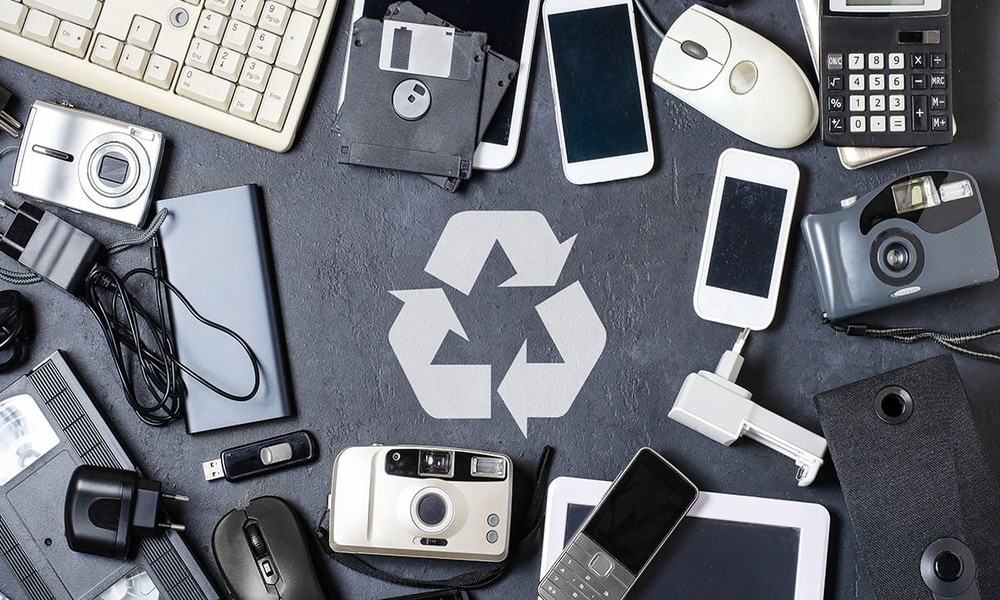
Upcycling electronics has quietly become one of the most practical solutions to a problem that grows larger each year: the 53.6 million tonnes of electronic waste generated globally, with Singapore alone contributing 60,000 tonnes annually. Inside storage rooms and drawers across the island, millions of dollars worth of functional technology sits unused, not because these devices have failed, but because newer models have rendered them obsolete in the minds of their owners. Yet these abandoned gadgets contain components, screens, and processors that could serve useful purposes for years to come. The question is not whether old electronics can be salvaged. The question is why so few people are doing it.
The Scale of the Problem
The numbers reveal a troubling pattern. Research shows that the average Singaporean household owns at least three unused electronic devices. Multiply that across 1.4 million households and the scale becomes clear. These devices represent not only wasted resources but also potential environmental hazards. Circuit boards contain small amounts of gold, silver, and copper. Batteries hold lithium and cobalt. When dumped in landfills, these materials leach into soil and water. When incinerated, they release toxic fumes. The conventional recycling process, whilst better than disposal, requires significant energy input. Upcycling old electronics offers a third path, one that extends device lifespans without industrial intervention.
Practical Ideas Anyone Can Implement
The barrier to entry is lower than most people assume. Electronic upcycling does not require engineering expertise or expensive tools. It starts with recognising that a device’s original purpose is not its only purpose.
Consider the smartphone. In Singapore, mobile phones are typically replaced every 18 to 24 months, leaving millions of functional devices in limbo. These phones can be repurposed as:
- Dedicated navigation devices for vehicles or bicycles
- Home security cameras using motion-detection software
- Digital photo frames cycling through family memories
- E-readers for books and documents
- Baby monitors with real-time video streaming
- Music players connected to home speaker systems
One family in Jurong discovered that their eight-year-old tablet, too slow for modern applications, worked perfectly as a wall-mounted calendar and weather station. The transformation took less than an hour and cost nothing. Another resident converted three old smartphones into a multi-angle recording setup for online content creation, achieving results that would have required purchasing new equipment.
Beyond Basic Repurposing
For those willing to invest slightly more effort, upcycling electronics devices opens up more ambitious possibilities. Old laptops, even those struggling with contemporary operating systems, can be stripped down and rebuilt with lightweight software. The result is a functional computer suitable for word processing, web browsing, or serving as a media centre. The hard drives from these machines, once properly wiped, become external storage devices with the addition of an inexpensive enclosure.
Tablets with cracked screens often retain full functionality beneath the damaged glass. Mounted in workshops or kitchens, they serve as reference displays for instructions, recipes, or video tutorials. Gaming consoles from previous generations can be modified to run classic games, creating entertainment systems that appeal to both nostalgic adults and curious children.
Even components from non-functional devices hold value. Computer fans can be extracted and repurposed as cooling units. Small speakers from broken headphones find new life in DIY projects. Circuit boards, while no longer functional, become teaching tools for students learning about electronics.
The Community Response
Across Singapore, upcycling tech items has sparked a grassroots movement. Repair cafes have emerged in community centres from Woodlands to Tampines, offering free guidance on fixing and repurposing electronics. Volunteers with technical knowledge share their expertise with neighbours who arrive carrying broken devices they would otherwise discard.
Libraries have begun lending tool kits alongside books, recognising that access to basic equipment such as screwdrivers and multimeters removes one obstacle to repair and reuse. Schools incorporate electronics projects into their programmes, teaching students that technology is comprehensible and malleable rather than mysterious and disposable.
One workshop in Ang Mo Kio reports that 70 per cent of devices brought in for assessment can be repaired or repurposed rather than recycled. The materials saved, the energy conserved, and the knowledge transferred all represent victories in a larger struggle against waste.
Safety and Practical Considerations
Electronic device upcycling requires certain precautions. Lithium-ion batteries, common in smartphones and laptops, can be hazardous if punctured or exposed to heat. Any device containing personal data must be thoroughly wiped before repurposing. Cloud accounts should be removed, storage should be formatted, and factory resets should be performed.
Basic tools make most projects easier: precision screwdrivers, plastic prying tools, and anti-static wrist straps for those working with internal components. However, many upcycling ideas require no tools at all, just software and creativity.
The Path Forward
The government’s goal of becoming a zero-waste nation by 2030 depends partly on citizens finding alternatives to disposal. Manufacturers could help by designing products for longevity and ease of repair, but change at that level moves slowly. In the meantime, individuals can act.
Every device rescued from obsolescence represents resources conserved and waste prevented. The tablet that becomes a kitchen timer, the phone that becomes a security camera, the laptop that becomes a media server: these small acts of transformation accumulate into something larger. They challenge the assumption that value exists only in newness. They demonstrate that sustainability often requires not purchasing something different but reimagining what we already possess. And they prove that the most effective response to our electronic waste crisis might be the simplest: giving old gadgets new purposes through the thoughtful practice of upcycling electronics.