

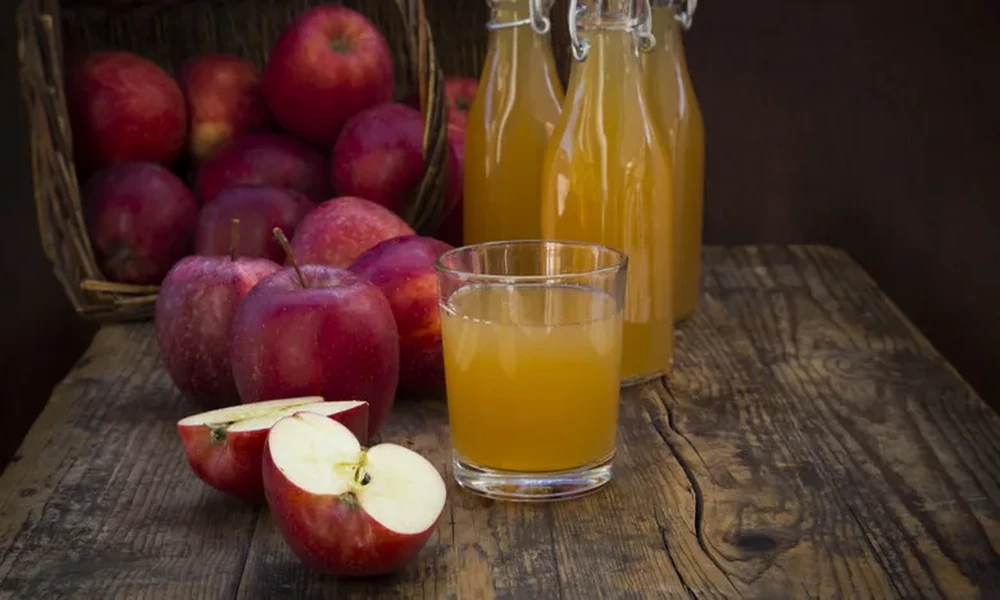
Most grocery store apple juice is a blend of whatever was cheap that season, and you can taste the committee meeting in every sip. Honeycrisp changes that equation. The apple was bred at the University of Minnesota in the 1960s specifically for texture and sugar-acid balance, and those same traits carry straight through to the bottle.
If you have only ever had mass market juice, you have not really tasted apple juice. You have tasted a compromise. Single varietal juice, pressed from one type of apple, tastes like the apple it came from, and Honeycrisp is the one worth seeking out first. You will find it sold as
Honeycrisp apple juice on the product pages of the handful of orchards that press their own fruit rather than buying concentrate on the open market.
This guide covers what makes Honeycrisp different, how to read a label without getting fooled, and a tasting method you can run at your own kitchen counter tonight.
What actually makes Honeycrisp different in the glass
Every apple sits somewhere on a sugar and acid scale. Granny Smith is all acid. Red Delicious is all sugar and not much else. Honeycrisp lands in the middle with unusually high levels of both, and that tension is what makes it interesting.
When you press a Honeycrisp, you get a juice that hits sweet first and finishes tart. That arc is rare. Most commercial blends flatten it out because they are built for consistency across millions of bottles, not for character. A blender’s job is to make February taste like October, and the easiest way to do that is to neutralize everything distinctive.
The texture trait matters too. Honeycrisp cells are famously large, which is why the apple crunches the way it does. Large cells rupture more cleanly under a press, which releases more juice per pound of fruit. Orchards that press their own Honeycrisp get more out of a bin than they would from a denser apple, and that economics is part of why single varietal Honeycrisp exists as a category at all.
I would take a cloudy, tart, slightly brown Honeycrisp juice over a crystal clear blend any day. That is a stance, and I will defend it. The brown tint comes from oxidation, the same reaction that browns a cut apple, and it is a sign the juice was not heavily processed. Clear juice is not automatically worse, but clarity is often achieved by stripping out the solids that carry flavor.
How do you read an apple juice label without getting fooled?
The front of the bottle is marketing. The back is where the truth lives. Here is what I check, in order.
- Ingredient count. One ingredient is ideal. Two or three is fine if the extras are water and ascorbic acid. A list of eight is a red flag.
- The word “from concentrate.” Concentrate is not poison, but it means the juice was boiled down, shipped, and rehydrated, and volatile aroma compounds do not survive that round trip intact.
- Varietal naming. “Apple juice” means a blend. “Honeycrisp apple juice” means one apple went in. Those are legally and gustatorily different products.
- Origin. A domestic pressing operation tells you something about freshness windows. Juice pressed and bottled within a day or two of harvest tastes different from juice that spent a month in a tanker.
- Certification marks. Organic certification is verified by a third party, not self declared by the brand.
One thing worth knowing about how apples get grown: the National Agricultural Library maintains the federal research record on pomology, and it is a surprisingly readable rabbit hole if you want to understand why certain varieties behave the way they do in a press.
Also, ignore the phrase “100 percent juice” as a quality signal. It is a legal threshold, not a compliment. Plenty of mediocre juice clears it.
A ten minute tasting you can run at home
You do not need a flight of glasses and a scorecard. You need two bottles and a clean palate. Try this the next time you are deciding whether a pricier single varietal is worth the extra three dollars.
- Pour two ounces of your usual juice into a glass. Let it sit for two minutes so it is not fridge cold. Cold mutes sweetness and hides flaws.
- Pour two ounces of the Honeycrisp next to it. Same temperature, same glass shape.
- Sip the blend first. Note where the flavor stops. Most blends taste sweet up front and then just end.
- Sip the Honeycrisp. Pay attention to the back half. The tart finish is the tell.
- Wait sixty seconds and see which one you want more of. That answer is more reliable than any tasting note I could write for you.
I have run this with friends who swore all apple juice tasted the same. Nobody has ever picked the blend. The finish is what does it, and once you notice the difference you cannot un-notice it.
Single varietal, blended, or cider: pick the right bottle for the job
There is a real decision here and most shoppers never make it consciously.
| Type | Best for | What to expect |
|---|---|---|
| Blended apple juice | Everyday drinking, kids’ lunches, big batches | Consistent, sweet, mild, easy to like |
| Single varietal Honeycrisp | Drinking straight, guests, holiday tables | Brighter, tarter, more aroma, less shelf stability after opening |
| Apple cider | Cooking, mulling, slow cooker pork | Cloudier, more body, often unpasteurized, spices well |
If you are buying juice to mix into a smoothie with banana and spinach, buy the cheap blend. You will never taste the difference and you will save money. If you are pouring it into a wine glass and handing it to someone, buy the Honeycrisp. Match the bottle to the moment.
One practical note: single varietal juice often has a shorter window after opening because it was not built for shelf life. Keep it in the door of the fridge and finish it within a week or so.
What to look for in the orchard behind the bottle
Apple growing is a long game. A Honeycrisp tree takes years to produce a meaningful crop, and the fruit is notoriously fussy about storage, prone to bitter pit and soft scald if handled poorly. That is why the variety costs more at the farm gate and why orchards that commit to it are usually making a deliberate bet.
Cooperative Extension programs run by land grant universities publish grower guidance on exactly these storage issues. The University of California Agriculture and Natural Resources is one such network, and its published material is a good reminder that the bottle in your hand is the last step in a long chain of horticultural decisions.
When you buy from an orchard that grows and presses its own fruit, you are paying for that chain. When you buy a blend from a multinational bottler, you are paying for logistics. Neither is wrong, but they are not the same purchase, and pretending otherwise is how people end up disappointed.
If you want to go deeper on the science of apple flavor compounds, the Agricultural Research Service maintains long running variety and quality research that growers and breeders actually use.
The bottom line on your next bottle
Honeycrisp apple juice is not a gimmick. It is a specific apple with a specific sugar-acid profile, and pressing it alone lets that profile reach the glass instead of disappearing into a blend. The tradeoff is price and a shorter post-opening window, and for most people that is a fine trade for a juice that actually tastes like something.
So here is my challenge for your next grocery run. Buy one bottle of the blend you always buy and one bottle of single varietal Honeycrisp. Run the ten minute tasting. Then tell me honestly which one you reach for the second time.