

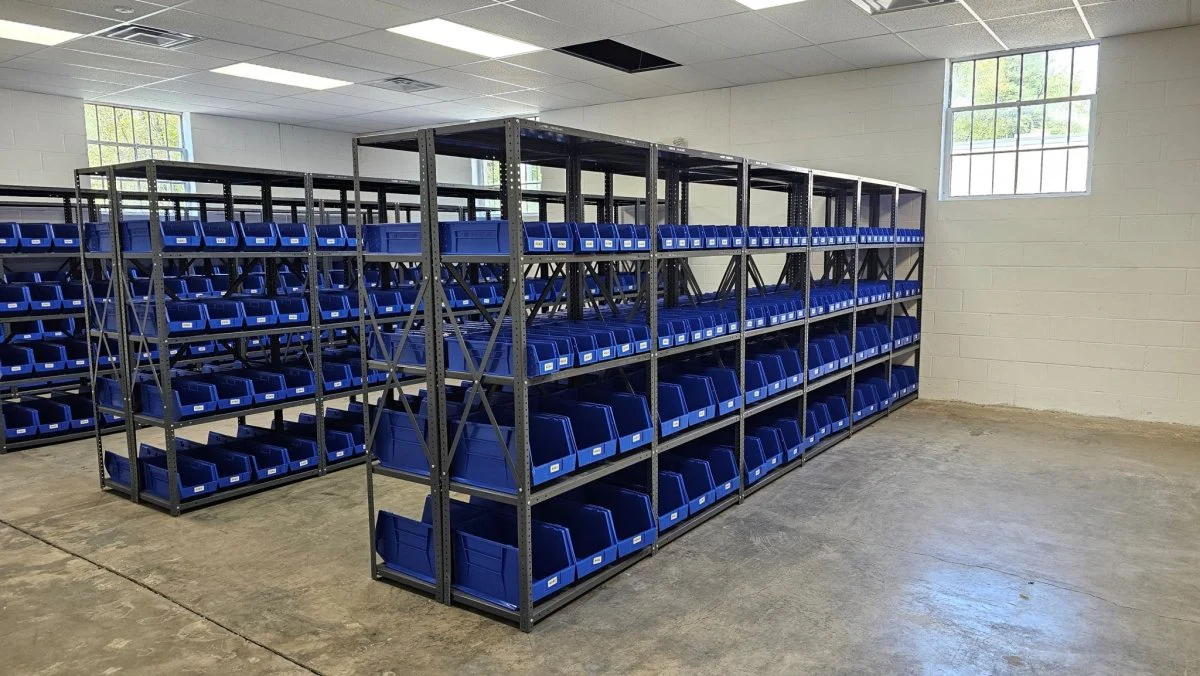
Ask yourself why some warehouses consistently outperform others, and you will find that the answer rarely lies in the obvious places, and it is in answering that question honestly that industrial stackable storage boxes emerge not as a footnote but as a central part of the story. The most productive facilities in the world share a common trait: they have solved the problem of organisation at a fundamental level, and they have done so through deliberate, systematic choices about how space and materials are managed.
This pattern repeats itself across industries and geographies. In Singapore, where industrial land is among the most expensive on earth and logistics operations are expected to function with the precision of a well-regulated ecosystem, the pressure to optimise every cubic metre of warehouse space is not a preference. It is a competitive necessity. The facilities that have responded most successfully to that pressure have, almost without exception, built their storage systems around heavy-duty stackable storage boxes chosen with care and used with discipline.
Why Storage Systems Shape Operational Outcomes
To understand why storage equipment matters so profoundly, it helps to think comparatively. Consider two warehouses of identical floor area. In the first, goods are stored in a mixture of cardboard boxes, open shelving, and improvised containers of varying size. In the second, operations are built around standardised industrial stackable storage containers fitted to a consistent racking system. The second warehouse will consistently outperform the first, not because its workers are more skilled or its technology more advanced, but because its environment is designed to support rather than obstruct the work.
This is the central lesson of comparative warehouse analysis: the quality of the storage system is a multiplier. It amplifies the effectiveness of everything else, the workforce, the equipment, the management process. Get it right, and the operation compounds that advantage over time. Get it wrong, and the costs accumulate just as steadily, through lost time, misplaced goods, safety incidents, and the slow erosion of staff morale that comes from working in an environment that fights against you.
The Biological Logic of Standardisation
There is something almost ecological about the way the best storage systems function. Just as a successful ecosystem is built on compatible and interdependent components, a high-functioning warehouse is built on containers that fit together, scale reliably, and integrate with the broader infrastructure around them.
The key features of well-designed industrial stackable boxes reflect this logic directly:
Load-bearing capacity
Industrial-grade models are engineered to sustain between 20 and 100 kilograms per container, with reinforced bases that distribute weight across stacking columns without deforming under prolonged stress.
Interlocking geometry
Precisely engineered ridges and lips allow stackable storage containers to lock together securely, maintaining column stability even in active handling environments.
Material resilience
High-density polyethylene and polypropylene provide resistance to impact, mild chemicals, and the ultraviolet radiation and humidity that Singapore’s tropical climate delivers in abundance.
Dimensional compatibility
Standardised footprints align with Euro pallet dimensions and common racking systems, allowing the boxes to slot into existing infrastructure without modification.
Ventilation variants
Perforated wall designs allow airflow for perishable goods, electronic components, or any contents where heat or moisture management matters.
Each of these features exists because someone, somewhere, encountered the problem that feature solves. The interlocking ridge exists because unsecured stacks topple. The reinforced base exists because overloaded containers fail at the corners. Good design is always, at its core, accumulated experience made physical.
Use Cases Across Singapore’s Industrial Landscape
Manufacturing and Precision Engineering
Singapore’s manufacturing sector, particularly in electronics and precision engineering, requires storage systems that match its tolerance for error, which is to say, very little. Industrial stackable storage bins provide the consistent, labelled, easily navigated environment that component management demands. Parts move from intake to assembly to inspection in containers that hold their contents securely and communicate their identity clearly.
Food Processing and Cold Chain Logistics
The food manufacturing industry presents a distinct set of demands. Industrial-grade stackable containers made from food-safe polypropylene are built for environments where hygiene compliance is non-negotiable. Smooth interiors resist bacterial accumulation, and most designs tolerate pressure washing and industrial cleaning chemicals without degrading.
Logistics, Fulfilment and Distribution
In Singapore’s distribution centres, which serve not only the domestic market but function as regional hubs for Southeast Asia, the throughput demands on storage systems are severe. Heavy-duty stackable storage boxes provide the structural reliability and dimensional consistency that high-volume picking, packing, and dispatch operations require. The boxes do not shift unexpectedly. They do not collapse under load. They hold their position and hold their contents, which is precisely the job.
The Questions Worth Asking Before You Buy
Selecting the right industrial stackable storage container begins with honest self-assessment:
- What loads will the container carry, and how often?
- Will it be exposed to moisture, chemicals, or temperature extremes?
- Does it need to integrate with existing racking or pallet systems?
- Who will handle it, and by what method?
- Is ventilation necessary for the contents?
These questions seem straightforward, and they are, but they are frequently bypassed in the rush to procure. The consequences of bypassing them are invariably paid later, in cracked bases, unstable columns, cleaning failures, and dimensional mismatches that render expensive racking systems useless.
The Compound Advantage of Getting It Right
Societies and organisations that solve foundational problems well tend to build durable advantages over those that do not. Storage is a foundational problem. It is not exotic. It does not attract attention. But the warehouse that solves it correctly will outperform the one that does not, year after year, in ways that are difficult to attribute to any single cause but impossible to ignore in aggregate.
In Singapore’s intensely competitive industrial environment, that compound advantage is worth pursuing deliberately and from the beginning, and it starts with choosing the right industrial stackable storage boxes.